Monday, March 17, 2014

THE OVERNIGHTERS

After North Dakota introduced the controversial technology known as fracking in 2008 it suddenly became the nation's second largest oil producing State.  So as the economic recession started to kick in really hard over the next few years, thousands of unemployed men unable to find work in their part of the country flocked to the new oilfields hoping to secure jobs. Many ended up the city of Willaston which is located in the oil rich region in the west of the state. Totally unprepared for job searching which could take some considerable time or at which they could fail as they were totally unqualified, many of these migrant workers ended up being homeless and destitute.

Their one chance of surviving and making their dreams succeed lay in the hands of an extraordinary local Lutheran Pastor who mounted what turned out to be a one man band to help these men try and succeed and move on. Pastor Reinke knew that the City permitted people to sleep overnight in their own cars if they were parked legally, but for the people that had come by bus and train, he went one step further and opened up the church premises and allowed them to sleep on any floor space they could claim.

This program called 'the overnighters' was started in the dead of winter and the church's congregation went along with their leader's plan assuming that when the spring came, the men would move out and on. But each day more and more men arrived seeking refuge and the trickle turned into a flood. The Pastor suggested that the men make a voluntary contribution towards their keep, but insisted on them submitting to a background check and also attending church.

As this influx of cars and men impacted the neighborhood and at the same the crime rate also rose the local paper started to voice the concerns of the community and published a few damning pieces on the Pastor's activities.  In a badly thought out move he panicked and invited one of the men who had been a convicted sex offender to stay with his own family to take the heat off for a while.... but when word got out, it was the start of the unravelling of the whole program and the Pastor's own life.

Director Jesse Moss was his own one man crew when he filmed this in 2012/3 and he gets up close and personal in telling the intimate stories of some of the men that are passing through in the hope of a better life.  And although their struggles simply to survive are a powerful indictment on the effects of the downturn of a global economy on ordinary working men, it is the Pastor's own somewhat bewildering and incessant crusade that is the main focus here. Reinke is resolute in his sheer doggedness to offer these men shelter and hope despite the overwhelming objections of the City, and of his own congregation who are angry at being railroaded into giving their support to something they can no longer tolerate.

The Pastor's very blinkered approach to expecting all of his neighbors to act as he believes Christians too unfairly casts them as the devil's advocate when the refuse to go along with all his plans, and he eventually pays the cost of pushing them all too hard. There is more than hint that he has his own troubled past and on one occasion when he sympathies with one of the men who is baring his tormented soul, he remarks that they have a lot more in common than the other man would think. There are also the tell-tale signs of sudden flares of anger when Reinke believes that anyone has betrayed his trust in him. And then when the chips are down at the end of the movie, Reinke shocks his placid wife (and us) with a surprising confession.

Moss's movie never steers shy from showing the sheer despair of these men, and even of their guardian angel too.  This compelling feature length documentary is quite an eyeopener, in every sense of the word. 

★★★★★★★★

ELAINE STRITCH : SHOOT ME

In the year approaching her 87th Birthday Broadway Legend Elaine Stritch allowed first time Director Chiemi Karasawa to follow her around and film her warts and resulting in this compelling new documentary.  A brave move for someone battling with diabetes and failing health who is determined to keep performing even though it seems such a toll on her both physically and mentally.

Ms Stritch's career stretches back over six decades and looking through all the archival footage and some of the glorious photographs of the past, one is simply overwhelmed by the sheer magnitude of her work. She really is the old-fashioned definition of a 'star' which is obvious with not just all the award-winning roles that she created but her boundless style that she imbued in every single part.

As the camera relentlessly trailed the indomitable performer as she gets ready for her latest one woman show, so close that at one time she balled the cameraman out for coming into tight 'goddam it's not a skin commercial ', this cinema verite style showed Ms Stritch at her most vulnerable. There is a scene where she is visibly very extremely upset and totally disorientated during a pernicious diabetes episode and suddenly her brash confident persona disappears and all we see is a frightened old lady.

A disarmingly frank Ms Stritch refuses to call herself old .... she prefers to say that she is 'getting older' as we are all, a fact that seems to give her comfort. When she touches on the topic of death, she claims that her fear of dying fires her adrenaline, and insists that she focuses on enjoying her longevity but there are some occasions where that doesn't always seem to ring true.

This highly personal film gives us some tense heart-wrenching moments that can turn into scenes of real joy. There is a time when Ms Stritch is having a Tech rehearsal for her Show at NY's Town Hall and she cannot remember a single lyric to the Sondheim songs that she has sung for decades.  She leaves the stage totally distraught but then some hours later comes back to give such an amazing spine-tingling near perfect performance that shows in a instance what a real trooper this remarkable woman is.

A nice touch to this heart-warming documentary were the interviews with other actors and co-stars who had such unfettered enthusiasm and respect for her as an actor and as a person that they truly loved. The late James Gandolfini went one stage further with his tribute by claiming that if he and Ms Stritch had met when they both 35 years old they would have most likely had a torrid love affair that would have ended really badly. 

One of the many highlights of her long career was in the original 1970 production of 'Company' where she got to first sing the infamous 'The Ladies Who Lunch'. However it is another Sondheim classic that she has since claimed as her own, and is nowhere more appropriate than now when she never fails to bring the house down with 'I'm Still Here'.

This is a spell-binding must-see tribute to a helluva wonderful old Broad.  A sheer joy.

P.S. This movie ends with her buying a Condo in her hometown in Michigan and she is finally threatening to retire.  She is featured in Rick McKay's documentary 'Broadway : Beyond The Golden Age'  due to be released later this year, so we haven't seen the last of her yet.

★★★★★★★★★★

Saturday, March 15, 2014

FINDING VIVIAN MAIER

A young graduate working on a history project bought a suitcase full of photographic negatives in a Chicago auction hoping that one or two them maybe useful in his research. However what John Maloof discovered that day in 2007 was a treasure trove of what is undoubtedly one on the finest collection of street photography ever made.  They all turned out to be the work of one person a Vivian Maier, someone so totally unknown there wasn't a single mention of her on Google or any other Internet search engine.

A curious Maloof turned detective and his painstaking research helped him very gradually put together a picture of this mystery genius and at the same time discover and purchase even more of her work.  Vivian Maier had been born in New York in 1929 and had then spent much of her childhood in France before returning to Chicago where she worked for almost 40 years as a Nanny. Every new discovery Maloof made about the unknown Maier was a shocking revelation as very few of the people she had worked for had any sense that this extremely odd woman they had hired to look after their offspring was a prolific obsessed photographer with such a remarkable eye.  It seems most of her young charges knew as Nanny Maier dragged them through the seamier rough spots of the city clutching her camera looking for subjects as part of their daily constitutional.

As Maloof pieced together Maier's story like a jigsaw what emerged was a picture of a very eccentric loner and a compulsive hoarder who was an immensely private person.  It's only when he traces her steps in France does he discover that Maier knew that she was talented but apart from a brief correspondence with one printer did she ever talk about letting people see her work.  The fact that news of the discovery of the 100000 plus negatives and the 700 plus undeveloped rolls of film had gone viral, there were still doubters from the people who new Maier that she would have ever wanted this worldwide fame and recognition.

This new documentary that Maloof wrote and directed, along with writer/producer Charlie Siskel, is exceptional for two distinct reasons. Firstly the very human story about this rather bizarre woman who was described as being 'so awesomely unique' and 'a very closed cold person' and who ended up losing one job with the mother explaining to her child 'Vivian has got a little too crazy even for us'.  The reminisces of the people who knew her are riveting and poignant. And then there is this whole superb body of work which is so exceptionally wonderful it stuns you into silence at times. Howard Greenberg a leading NY Gallerist who holds exhibitions of her work claims that no other photographer's work has ever generated this much interest in his time.

Credit to Maloof on several counts.  Not only for recognising the significance of his find, and for his sheer doggedness and determination to 'finding' Vivian Maier, but also for the impressive way he put this all together in this, his first ever movie.

There are so many components of this story that will keep you wondering and wanting to know more.  Like why would this aggressively shy person produce so many ingenious portraits of herself that she could  have been  credited as being the creator of the ubiquitius selfie?

Unmissable : and you will want to see it at least twice.

★★★★★★★★★★

Friday, March 7, 2014

ELSA & FRED

Newly widowed Fred has been coerced by his control freak of a daughter to sell his large house and move into an apartment in New Orleans. He is stubborn, perpetually grumpy with everything and everybody and spends most of his days now lying around the house sleeping. It is, he explains because of the realisation that he is in the twilight of a very disappointing so-so life. He was married to a woman he hated for 40 years and had a meaningless job in telecommunications he loathed.

Unbeknown to Fred, that is all about to change as his new neighbor Elsa has espied him across the hallway and has decided to set her cap at him.  She is as elderly as him, but with a permanent twinkle in her eye and with such a zest for life, she is almost the exact opposite.  Fred manages to avoid her completely until he has a mini plumbing emergency and has to go seek her help, and although even after that he doesn't show the slightest interest in even being polite let alone friendly, that doesn't stop Elsa's dreaming and scheming.

Elsa has always been a hopeless romantic and fantasist and pride of place on her wall is a poster of Anita Ekberg from Fellini's 'La Dolce Vita' in the scene in The Trevi Fountain where she makes love to Marcello Mastroianni.  It is exactly how she wished her own life had panned out.  Elsa does have an endearing habit of confusing her imagination with reality at times. It's not that she is a pathological liar but she does have a tendency to embellish her stories by adding and deleting facts whenever it makes her appear more interesting.  And as Fred slowly warms to her gentle but insistent overtures he soon learns to take most of Elsa's tales with a pinch of salt.

And just when Fred finally gives in to her advances and starts being a human being again, he discovers the one story that Elsa has failed to even mention. She is terminally ill. And so instead of investing his savings in some hair brained business scheme that his daughter's sleazy husband has concocted, he blows it all on taking Elsa on a trip of a lifetime to Rome so that she can finally have her own rather glorious 'Ekberg' moment.

This delightful syrup sentimental comedy is purely a vehicle for two wonderful actors to have some real fun that we can share.  Shirley MacLaine and Christopher Plummer had this startling chemistry together and were completely adorable as these two old very funny lovebirds making one final go of it before they croaked.  They were such a sheer joy to watch making this essentially very lightweight story so very enjoyable.  They had an impressive supporting cast that included Marcia Gay Harden, Chris Noth, James Brolin, George Segal and Scott Bakula  but as they were mere props in this story, they had very little to say or do.

Directed and co-written by Michael Radford (Il Postino) this was a re-make of an Argentinean movie of the same name that was a very big smash in Spanish speaking countries in 2005.  This will not end up as a big blockbuster, but it will be a hit with an audience wanting to see two old-school movie actors who really are stars in every sense of the word.

★★★★★★★★


Wednesday, March 5, 2014

HAPPY VALLEY

Although Amir Bar-Lev's new documentary is about the sexual abuse that infamous Penn State football coach Jerry Sandusky carried out on scores of young boys over a 15 year period, the focus is less on the crimes themselves but about the whole culture surrounding them and the devastating effects on that college town.  

Initially there was a controversial wall of silence about this molester's activities that not only shielded him for many years from the authorities but allowed him to keep on molesting and raping the boys. The knowledge that Head Coach Joe Paterno simply failed to report Sandusky's actions was cause for him to be unceremoniously fired from the University, an action that was not applauded by the local community in any way, but ferociously publicly condemned.

Bar-Lev strove diligently to present his investigation in the most non-partisan manner but the sheer passion and indignity of most of the outraged  local community unwittingly painted a very biased picture. Their beloved Paterno had coached the football team for decades and had made it one of the most successful in the country with its countless wins and trophies.  As his fame and success grew he turned down countless lucrative offers to coach elsewhere but he chose to remain at Penn. and his loyalty was rewarded by the slavish devotion of seemingly the entire town.

The fact that Paterno was considered not just a hero but more like a Saint meant to all his legions of fans, he could do no wrong.  And when he was dismissed all the students actually rioted on the campus and their anger was directed completely at the media for their part in exposing the crimes, with not even a hint of disgust at the gravity of the damage that Paterno had continued to allow to happen on his watch. Football they all infer very loudly, is far more important than life.

The most devastating story is that of Sandusky's adopted son Matt. Now married and with a family of his own, Matt had initially been vocal in supporting his parents, but when the shocking details of his father's activities came to light, he decided to speak up and tell his story too.  It took a great deal of courage to go public with the fact that after Sandusky had rescued him from a poverty-stricken broken home he had ritually abused him right through his childhood.  Matt is one of the very few people that came through these events with any shred of decency.

Paterno was diagnosed with cancer and died soon after his dismissal. His family were to be sympathised with as they were now left having to deal with all the aftermath. especially as Sandusky's Trial was starting and they were very much in the public eye again. However our affinity with them is soon tested as they considered their father the actual victim of all this (and not the abused boys?) and they focus all their attention on hiring an independent investigator to try and effectively diminish Paterno's portion of the blame.

Wherever Bar-Levi's cameras went in the community they encountered sheer unbridled anger which was universally somehow pitted against the rest of the world  ....... and the media in particular. It was as if there had been a giant conspiracy simply to ruin Penn State and thus punishing them all. Not that any of them were in anyway responsibly for either Sandusky or Paterno's action, but it is odd that not once did anyone offer any words of remorse. Their unfaltering faith in Paterno seemed almost religious, but then again, there are many similarities in this story as to the constant flow of tales of Pedophile Catholic Priests.

Lest we forget, Sandusky was found guilty on 45 counts of child abuse on June 22nd 2012.  No one will ever know how many others went unreported/undetected.

Unmissable documentary.

★★★★★★★★

P.S. The title ironically is the name of the  area where the Campus is.

P.P.S. Al Pacino is already shooting a feature film based on Paterno's story.

Tuesday, March 4, 2014

DIFRET @ Sundance

Hirut, a 14 year old Ethiopian girl, is walking home through the fields from the village school when she is suddenly surrounded by a group of horsemen who snatch her up and take her off.  Tadele their leader intends to marry her, but first he imprisons the frightened young schoolgirl in his hut,, and beats and rapes her. Next morning she somehow manages to escape and also grab one of men's rifles before she runs off. Once her disappearance is discovered the men chase after her and when she is once cornered she fires and inadvertently kills one of her pursuers.

When the police take Hirut into custody she is charged with murder, whilst the men's actions are totally overlooked as kidnapping a potential bride like this is a well-respected tribal tradition.  The tribal elders meet and the dead man's family are demanding their rights to kill Hirut as is their custom.  Meanwhile she also certainly faces the death sentence in the Courts too, but as the news of the case is broadcast on the local radio, the story reaches the ears of a potential saviour.

Meaza is a very rare breed ... an Ethiopian female lawyer .... and she soon heads to the tiny rural police station where Hirut is being held.  When neither of the policeman, or the local D.A. will take her seriously, she gets her old influential University Professor to pull strings to at least be able to get the girl out on bail. Unable to get a single villager to speak up publicly on Hirut's behalf at a Trial, Meaza knows she is up against a legal system that will automatically side with the men, albeit the fact that she was raped.  The only way for her to get an acquittal for the girl is to seek a change to the law itself so that self-defense can be accepted as a defense. However before she can ever achieve this her livelihood is threatened with the forced closure of her Legal Centre, and both women's lives are in real danger.

Set in 1996, this gripping piece of fiction is based on a very real case where a very determined female lawyer acting totally on her own, took the unprecedented step of suing the country's powerful Minister of Justice to compel him to effect a change in the law to safeguard young girls. Her efforts resulted in the widespread tradition of kidnapping being completely outlawed from then on. 

In this first movie written and directed by Ethiopian Zeresenay Berhane Mehari, the part of Meaza is powerfully played by Meron Getnet a local TV star who imbues this very human drama with a mesmerising performance. It is a heart rending story that feels one with dread and sheer anger until the final outcome is known. With Angelique Jolie now on board as Executive Producer, and having won a Audience Best Film Award at Sundance, and Best Fiction Film at the Berlinale, hopefully this movie will get the audience it so richly deserves.

P.S. In the Amharic language, the word “difret” has a double meaning. In its widest use it means courage and the closest English translation means “to dare”. But in Amharic, it also has a double-entendre that means “the act of being raped”.

★★★★★★★★

Sunday, March 2, 2014

LIKE FATHER LIKE SON

In the opening scene a young 6 year-old boy is sitting upright in a low chair spaced away from his parents who are either side of him. All three are dressed formally in black and are facing two officials behind a desk in this stark room who are firing questions at the boy.  It's all very intimidating but he answers back rapidly without a hint of emotion. It turns out that he's being interviewed to for admission to a much sought after private school, and he had been tutored to provide the correct responses that would give an impression that he is part of a perfect Japanese family.

Ryota his father, is a highly successful architect who, as a workaholic, is rarely around to share much time with his son.  His mousy mother who, after having a tough time giving birth to him was unable to have any more children, devotes her whole life to him, and being subservient to her husband too.  The family live in an expensive glass tower block in the city center and it is decorated and minimally furnished in a cold orderly fashion just like their lives. Asides from the fact that Ryota is unable to succeed in filling his easy-going son Keita with his own totally focused ambition, they are to all intents and purposes, a happy family in their own way.

However, a phone call one day from the hospital Keita was born soon puts an end to all that.  For a reason that will be revealed later, there was a mix-up between the babies born that day and they are now told that he is not in fact their biological son. The embarrassed authorities hastily arrange a meeting with the other couple who have been raising their son, and who are clearly the other end of the social scale.  Yodal runs a small messy Appliance Store and to help make ends meet his wife Yukari works part time in a fast food Noodle Bar.  Their son Ryusei is the oldest of three children and they all live together, with Yodal's elderly father too, in a cramped tiny apartment above the store.  It is obvious though that the children adore Yodal who prefers to devote most of his time playing with them rather than working in the store.

When they first meet Yodal seems preoccupied with suing the hospital authorities to get as much financial remuneration in damages as possible, and although Ryoto agrees with him in public, he has a totally different agenda in mind.  It is obvious that at some time the families must effect a swap to get their own children back, but as there is no precedent on how this should happen, they agree to get to know their birth child first.

After some months pass by and it is obvious that either of the mothers can or want to make the decision, it's up to the men to agree that they should in fact have their own sons back.  It's something no-one seems to want to do especially the children who are completely unhappy in their new homes.  Ryoto is threatened by the disorder of having a son that he cannot manipulate and shape into as a carbon copy of himself, and Ryusei is miserable living in such a cold clinical environment.  Keieta on the other hand although initially yearns for his mother, is soon won over by all the warmth and laughter of his happy new family.

In a plot which is completely impossible to predict, writer/director Hirokazu Kore-eda keeps adding nuances so that neither of the families scenarios are exactly what they initially appeared to be.  Ryoto is still dealing with unresolved issues from his childhood when his father left his young mother and he ran away from home and was dragged back to be brought up reluctantly by his step mother.  The initial impression of Yodal being a  money-grabber who simply wants to exploit the situation for his own means is soon dissipated when one realises what a devoted and wonderfully generous parent he is.

This swapped-at-birth is a well trodden theme (think 'The Other Son' in 2012) but what makes it work so beautifully here is the subtlety of the story and how in such a respectful and well-mannered culture such as this, the anguish of the parents in particular manifests itself in a controlled fashion without the obvious histrionics. Its superbly acted too, particularly by the two very young boys who are tugging at your emotions ever second of the 2 hours.

A compelling spell-binding movie that quite rightly won Mr. Kore-eda the Jury Prize at Cannes Film Festival, and it just maybe make you go back and look at your parents to see if you were given to the right ones too.

★★★★★★★★★

Saturday, March 1, 2014

DRUNKTOWN'S FINEST @ Sundance

'Sick Boy' wants to enlist in the Military to provide for his girlfriend and their baby on the way but he keeps slipping into his old habits which get him into trouble. Nizhini was adopted and spent most of her adolescence boarding in private schools far away and is obsessed with locating her birth family. Felixia is a pre-operative transsexual and although lives with her sweet old-fashioned grandparents, still manages to secretly turn tricks to earn extra cash.  What all three have in common is that they were raised in a New Mexico Navajo community,  and their totally separate stories about finding themselves eventually cross paths towards the end. 

Its tougher than normal for these twenty-something year olds as they search for love and acceptance.in a town which has gained a notoriety for having one of the highest rates of alcohol abuse in the country.  The gorgeous but promiscuous Felixia hooks up with Sick Boy when he is high at a party one night.  However the drunk angry father-to-be runs off when he realises what he is actually in for when he puts a move on her. When the very earnest religious Nizhini uncovers that her 'white' parents have lied about her birth family she also discovers that she has living grandparents and is related to Felixia too.

There is a neat juxtaposition of all three stories in this fresh and realistic look at contemporary life on a Reservation where the excess of alcohol is mixed with the sheer desperate lack of employment. Nizhini escaped by default, and now the other two are desperate to get out too no matter how severe their methods maybe. 

What is a very big plus point, is the refreshing way that Felixia suffers no persecution at home at all and her traditional grandparents accept that she has a 'two spirits' identity in accordance with their traditions. 

It's an impressive first feature written and directed by a local Native American Sydney Freeland, and is imbued with such sincerity and authenticity that one wants to forgive the patches of awkwardness one gets sometimes from using newbie and untrained actors.

★★★★★★★

Tuesday, February 25, 2014

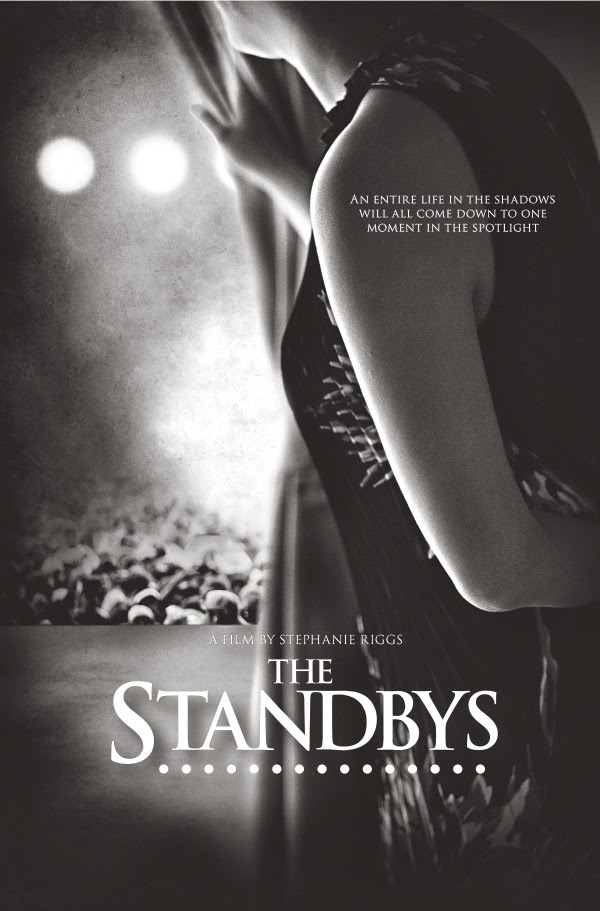
THE STANDBYS

There cannot possibly be any other job in Show (or any other) Business where you need the patience of a Saint, be as tough old nails, and as resilient as a rubber band whilst possessing enough talent to substitute for a Broadway Star at the drop of a hat. This is of course the role of a Standby who spend their whole careers in the wings looking at the spotlights that may never ever shine on them.

Stephanie Riggs's moving and fascinating documentary follows the heartbreaking stories of three such performers who have made careers out of just waiting to go on.  There is Merwin Foard, a good humored seasoned actor, with his amazing deep baritone voice, who gets his chance one afternoon to play Nathan Lane's role in 'The Addams Family'. He goes on stage to the customary groans from the audience when they realise they are not going to see the 'star', to wowing them all with his performance and earning a standing ovation by the end.  Foard has been at this profession for 25 years now and has been in 14 Broadway productions, nearly always as the Standby, but it has at least allowed him and his family to have a comfortable life.  He considers himself one of the lucky ones.

Young Ben Crawford was the Standby for Brian d’Arcy James who had the title role in 'Shrek the Musical.' His Agent had procured him a Contract that gave him the right to take over when the Star eventually left, and that's exactly what happened. Crawford got to wow audiences with his own take on the role and received some really good notices for his performance.  He felt secure in the knowledge that he had finally 'arrived'. Then as the Show was set to close on Broadway, the Producers of the National Tour asked Crawford to audition for the role he had already played so well for months.  They also asked his Standby too, and in a cruel twist of fate, gave the role to the new man instead. 

The third actor was Aléna Watters whose roller coaster career was the hardest to witness.  She got her big break appearing as one of the Harlettes who were the backing Group for Bette Midler.  After a short stint in Bette's Show in Las Vegas, the Producers called Aléna and without warning told her she would be replaced by one of the original Harlettes was returning. She was told that she could remain as 'the Swing' who would understudy for all the girls which cushioned the bitter blow slightly. But then a month later and a second phone call, and she was laid off from that 'due to budget restrictions'. She was devastated, as are we watching this all unfurl.

All three performers were generous enough to allow Riggs and her cameras to follow them around for a couple of years and show all of their daily tribulations. She in turn does at least allow them a moment to showcase their talents with a song or two.  As Bebe Neuwirth, herself once a Standby said, that if it wasn't for Broadway's obsession with filling the stages with big celebrities these were the real performers who should be starring in these roles'.  And its left to another ex Standby David Hyde Pierce to sum it up so succinctly about when they actually get to go on.....'for the audience its just yet another afternoon, but for that performer it could the highpoint of their entire life.'

A must view for anyone who ever dreamt that they could or should have won a Tony.

Click here to download or watch it streaming

★★★★★★★★

Follow my blog with Bloglovin

Saturday, February 22, 2014

Mr X @ Sundance

Auteur is a much misappropriated word in cinema in the same way designer is in fashion, but the idiosyncratic extraordinary Leos Carax is one filmmaker who so unreservedly deserves the accolade. This new affectionate tribute to him examines why since his first film at the tender age  of 24 'Boy Meets Girl' won him an Award and much love at Cannes in 1984 and even though he has made just four other features (and contributed to two more), he is universally regarded as one of the most important filmmakers in French cinema today.

Documentarian Tessa Louise-Salomé takes on the task of trying to find the real man behind the mask and starts by asking Carax if this was a real or assumed name. To which the reply was simply 'it's a real assumed name!'  And that neatly sets the standard for the answers she will get from this very elusive figure in her investigation.  Louise-Salomé had been an assistant on Carax's latest (and possibly best) movie 'Holy Motors' which one critic had called 'The craziest film of this year. Or any year' and still gave it 5 stars .... so she at least had a heads up on the man. 

Carax's debut saw the start of two long very significant relationships for the filmmaker.  The first with actor Denis Levant who Carax plucked out of the Conservatory and thrust him straight into being a leading man in all his movies, and the second with award winning cinematographer Jean-Yves Escoffier. And whilst his 2nd movie 'Bad Blood' stirred up some controversy, it was his third that would actually make his reputation although at the time it seemed like this extravagant way-over-budget piece would prove to be his potential downfall like Warren Beatty's 'Ishtar' or Kevin Costner's 'Waterworld.'

'Les Amants du Pont-Neuf' started with a modest budget of 7 million francs and was scheduled to be shot on location in Paris.  The Mayor would only allow Carax to shoot on the Pont Neuf for 10 days, so he built a full size replica which would prove to be only the first of many headaches.  The somewhat paranoid Carax who obsessed over every minute detail filmed on and off over the next two years and the movie ended up costing over 100 million francs when it was eventually finished in 1990.  A very young Juliette Binoche was the star (along with Lavant) and she described the whole lengthy process as chaotic with some days Carax just pointing the camera and expecting her to act without a script or actual direction. Yet now as she reflects back on it all she appreciates that what a unique experience it was to be working on what turned out to be Carax's most popular film ever. She, and everybody else interviewed, never hesitated in calling this willfully bizarre man anything less than a genius.

Carax's output is hard to define. It is stunning visual and bears no resemblance to anything one has ever seen before on a screen, and always shocks, horrifies and delights you at the same time. This documentary neatly highlighted the fact that some essayists tend to over intellectualise his work.  It is always open for interpretation but maybe not as pretentious as some of them allude too.

Louise-Salomé's excellent wee film may not have uncovered much about the mysterious solitary man himself, but it is a fond appreciation of exceptional filmmaker which will truly delight cinephiles everywhere.

★★★★★★★★★

Tuesday, February 18, 2014

LOCKE

Ivan Locke is on the eve of the biggest challenge of his career. Tomorrow sees the biggest concrete pour ever that will serve as the foundation for Europe’s largest building to date.  As the foreman of the site he is considered not only the go-to expert but also a safe pair of hands to insure that this mammoth operation will be done without a single hitch.  However, that night he receives a phone call that will not only put the whole project in jeopardy, but will serve to unravel his job, family and his entire life.

Several months earlier whilst on another ‘concrete pour’ away from home, Locke had a one-night stand with an older rather lonely woman.  It was a brief fleeting moment that he had totally forgotten about until tonight when the woman, very scared and panicking, had suddenly phoned him out of the blue to tell his she was about to give birth to his baby at any moment. So after finishing work that day he jumps into his BMW and hotfoots it down the motorway from Birmingham to the hospital in London where the woman is having a difficult labor.

In the course of the 3-hour drive Locke tries to manage the job and also his wife remotely by a series of very fraught phone conversations.  Neither his flabbergasted boss nor his unsuspecting wife can accept Locke’s reasoning for abandoning them both on a whim like this and the phone calls get menacing and bitter as they threaten to destroy Locke if he persists with what they can only see as a foolhardy plan.

Meanwhile in between all this rancor Locke is also balancing calls to his deputy Forman who Locke is convinced can manage the task on his own, even though at this hour the man is already the worse the wear for drink.  He also manages to deal with the police and council officials to insure that the construction site has all the right permits for the task.  On top of which Bethan, the now very distraught mother to be, is also bombarding Locke with hysterical demands as her deteriorating condition means that the Hospital need to make decisions to try to save the baby.

Throughout this all Locke is cool and collected and deals all the anger thrown at him is a quiet reasoned manner.  Even though his Boss fires him, Locke continues to brief his (ex) deputy as he is still convinced that he can supervise the job at a distance.  He does however fail to calm his hysterical wife and she refuses to now take his calls and Locke is left communicating to her through his two teenage sons who are not interested in any family drama and much keener in relaying the play-by-play detail of the football match they had been hoping to watch with him on TV that night.

The sons are obviously the real joy in Locke’s life but in the gaps between the phone calls we learn the real reason why his is insisting on undertaking this journey tonight and its to do with the fact his own father had deserted him at an early age, and so Locke will do anything to avoid repeating this, even though it may end up at a very steep cost.  He has no intention at all of starting any sort of relationship with Bethan, but he wants to take responsibility for his new child regardless.  Whatever his irate boss and his wife who has been blindsided by this one act of betrayal think of him, Locke is in fact a decent man who simply wants to do the best.

Written and directed by Steven Knight, who picked up an Oscar Nomination for his screenplay for Stephen Frears ‘Dirty Pretty Things’ and is also known for writing ‘Eastern Promises’ for David Cronenberg.  Knight wrote this piece for Tom Hardy and when he persuaded the actor to take the part, he was given just 2 weeks by the Actor’s agent to shoot the whole thing.  It is a tour-de-force career defining performance by Hardy who is on screen in that car for the entire performance.  He is nothing short of electrifying and I can totally appreciate why Knight insisted that the role was his alone.

There is whole plethora of wonderful English talent who are the disembodied voices at the end of the phone that included Olivia Colman, Ben Daniels, Danny Webb, Andrew Scott and particularly Ruth Wilson as Locke’s distraught wife.

Hands up too for Haris Zambarloukos the D.P. and Justine Wright the editor for helping make an entire movie short in car so compelling.


This small indie movie was shown in the Spotlight Section at Sundance this year and is just about to have a limited theatrical release in the UK.  I do so hope it becomes more widely available as the audience it so well deserves should see it.

★★★★★★★★★